VPN and Proxy Traffic in PPC Campaigns: What Advertisers Should Know
VPN and proxy traffic can make network attribution more difficult. Learn how advertisers should interpret these signals without automatically treating legitimate users as fraudulent.
November 3, 2026
·ClicksArmor
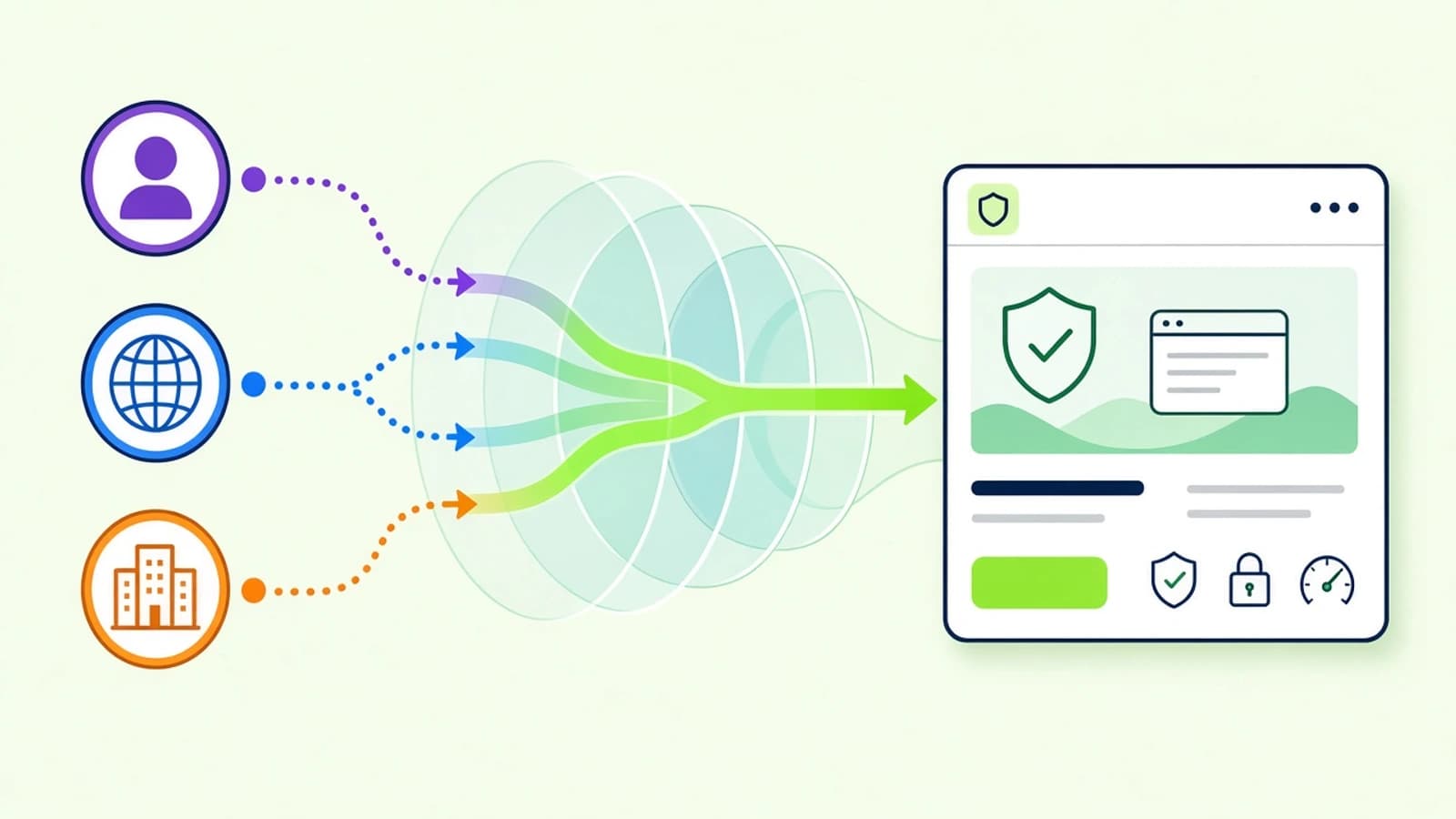
Privacy tools change how network signals appear in advertising analytics. A click routed through a VPN or proxy can look like it came from a different location or shared infrastructure - even when the visitor is a real person evaluating your offer.
That creates a trap: teams that treat every VPN or proxy signal as fraud will block legitimate customers. Teams that ignore network risk entirely miss coordinated abuse. The useful middle path is risk scoring with context.
What Is VPN Traffic?
A virtual private network (VPN) encrypts a user's connection and typically exits through a remote server. To your analytics, the apparent IP and geography often reflect the exit node, not the user's physical location.
People use VPNs for privacy, corporate security, public Wi-Fi safety, and regional access. Those are ordinary reasons - not proof of invalid traffic.
What Is Proxy Traffic?
A proxy forwards requests on behalf of a client. Like VPNs, proxies can mask origin IPs and concentrate many users behind shared addresses. Proxies appear in enterprise networks, content filtering, research tools, and - yes - some abusive operations.
From a PPC investigator's seat, "proxy" is a routing characteristic, not a moral label.
Why VPN and Proxy Traffic Appears in Advertising Campaigns
You will see masked network traffic because of:
- Privacy-conscious consumers
- Corporate and remote-work networks
- Shared infrastructure (hotspots, carriers, campuses)
- Legitimate remote access patterns
- Suspicious operations that deliberately hide origin
The same signal class covers both valuable buyers and abusive actors. Classification requires more than the VPN flag alone.
Why VPN or Proxy Detection Is Not Proof of Fraud
Network masking removes some attribution confidence. It does not establish intent.
Examples of legitimate VPN use that can look "risky":
- A traveler comparing vendors on hotel Wi-Fi with a VPN enabled
- An employee browsing from a company egress IP used by thousands of coworkers
- A privacy-first shopper in a competitive category
Blanket blocks on "all VPN traffic" therefore risk removing real demand. For the broader vocabulary of fraud vs invalid vs suspicious traffic, see what is click fraud.
How Advertisers Can Evaluate Network Risk
Combine network signals with:
- Click frequency and repetition
- Geographic consistency with targeting and customers
- Campaign-level anomalies (one campaign absorbing most masked traffic)
- Engagement and conversion outcomes where tracking is reliable
- Timing relative to launches or competitor events
A Google Ads-oriented review sequence is outlined in detecting invalid traffic in Google Ads.
Should Advertisers Block All VPN and Proxy Traffic?
Usually no.
Blanket exclusions can:
- Remove privacy-conscious buyers
- Punish corporate and mobile-carrier egress patterns
- Create a false sense of security while sophisticated abuse shifts elsewhere
If you exclude, prefer threshold-based rules (for example, repeated high-risk behavior from the same masked source) over "VPN = block."
A More Balanced Approach to Traffic Protection
- Treat VPN/proxy as one input among many
- Set conservative thresholds and review the first exclusions manually
- Allowlist known customer or partner networks when identified
- Revisit rules after a week - false positives show up in conversion data
- Use platform-supported controls appropriate to each network (IP exclusions where available; other mechanisms where not)
How ClicksArmor frames risk patterns and exclusions - without claiming certainty - is summarized on Features.
Conclusion
VPN and proxy traffic complicates attribution; it does not define fraud by itself. Use network signals inside a broader traffic-quality assessment, protect against repeated abuse, and avoid blunt policies that silence legitimate demand.
Related articles
Learn how ClicksArmor approaches detection and supported exclusions across platforms.