What Is Click Fraud? A Practical Guide for Advertisers
Click fraud can waste advertising budgets and distort campaign reporting. Understand how it happens, which traffic patterns deserve attention, and what advertisers can do about it.
October 22, 2026
·ClicksArmor
Paid advertising only works when the people who click are real prospects. When clicks are artificial, repeated without intent, or otherwise invalid, you still pay - and your reporting becomes harder to trust. That problem is usually called click fraud, though marketers also talk about invalid traffic and suspicious clicks. Those phrases overlap, but they are not identical.
This guide defines click fraud in a paid-media context, outlines common patterns, and explains what advertisers can investigate without treating every anomaly as proof of an attack.
What Is Click Fraud?
Click fraud refers to artificial or abusive clicking on paid ads - activity intended to waste budget, manipulate results, or generate engagement that would not occur from genuine interest. That can include automated scripts, organized human clicking, or competitor-driven repetition.
It is different from:
- Accidental clicks, such as mobile mis-taps
- Ordinary low-quality traffic, such as curiosity clicks that never convert
- Broader invalid traffic (IVT), which can include non-human or non-valuable activity that is not always intentional fraud
A useful working rule: treat unusual activity as a risk pattern until campaign data, engagement signals, and (where available) protection tools give you clearer reasons. Suspicion is not the same as confirmed fraud.
Common Types of Click Fraud
Advertisers typically see several recurring patterns:
Automated bot clicks
Scripts and bots can request ads and register clicks at scale. Timing may look unnatural, engagement shallow, and volume concentrated.
Click farms
Organized groups of people or devices generate clicks on demand. Behavior can look more "human" than bots, which makes farms harder to spot from volume alone. See our guide on understanding click farms.
Competitor-related repeated clicking
In competitive auctions, rivals may click ads to deplete budget. Evidence is rarely a single IP; look for repetition tied to your brand or category terms over time.
Coordinated device or network activity
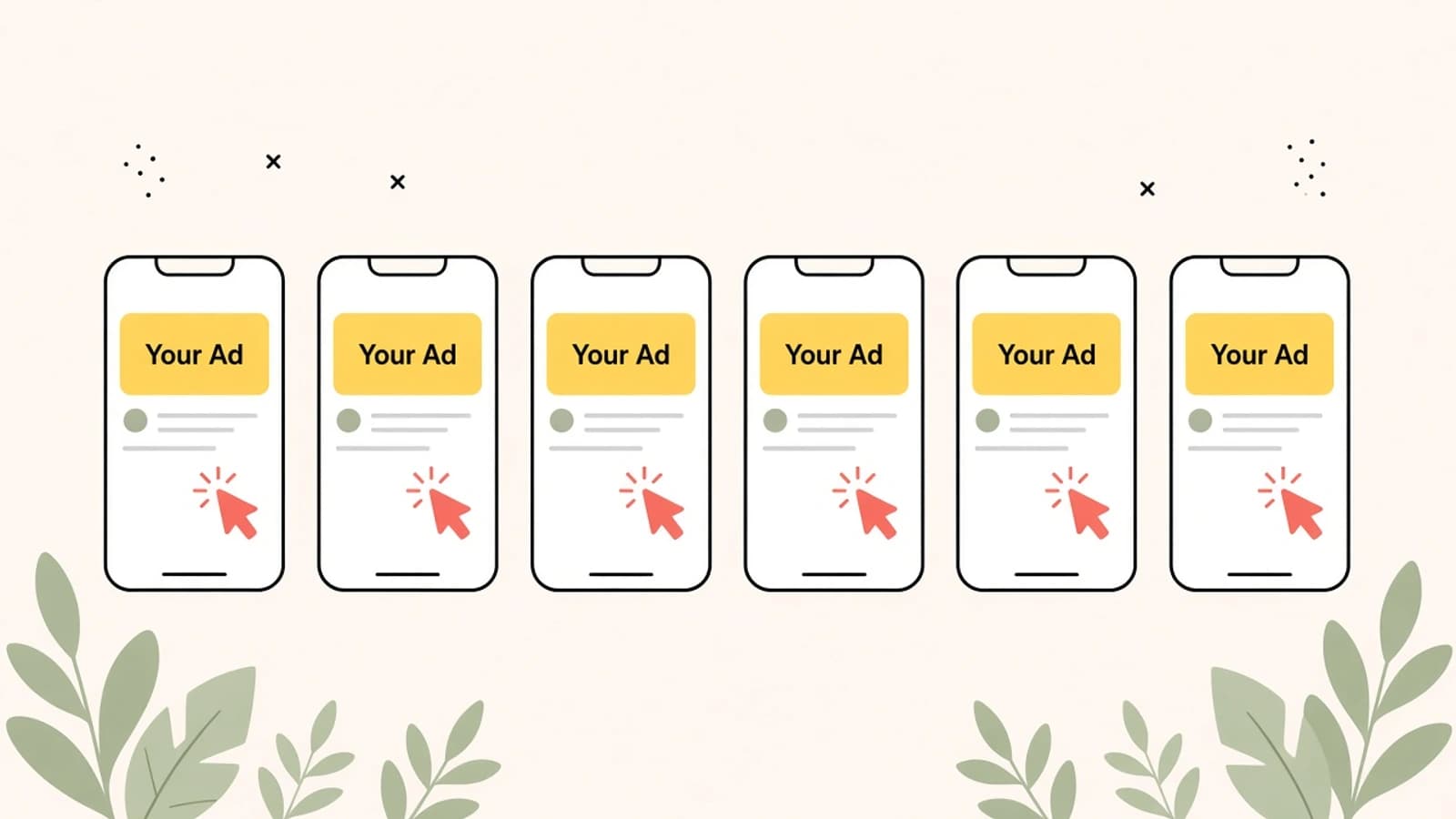
Multiple devices on related networks, similar session fingerprints, or synchronized timing can indicate coordination - even when each click looks ordinary in isolation.
Other suspicious traffic patterns
VPN or proxy masking, scrapers harvesting creatives, and low-intent bursts can appear alongside fraud. They deserve review, but they are not automatic proof of malicious intent.
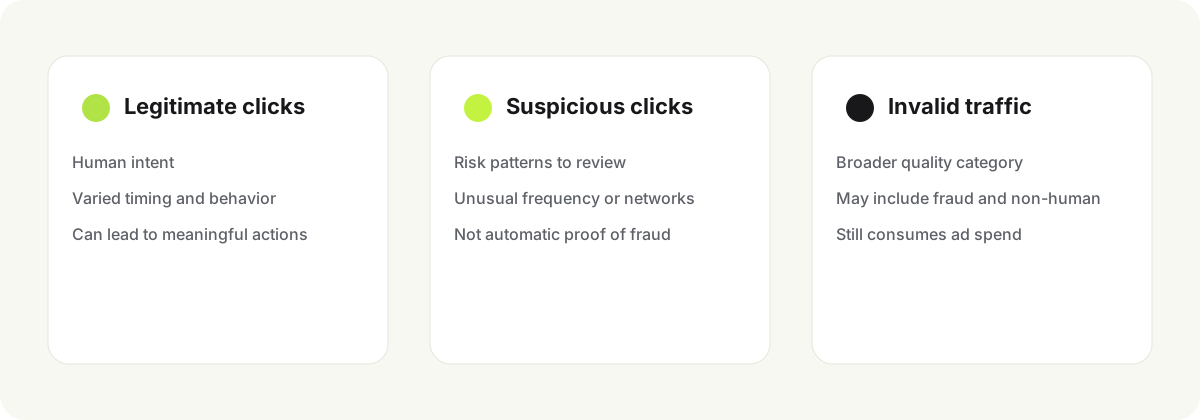 How legitimate clicks, suspicious clicks, and invalid traffic differ
How Click Fraud Affects Advertising Campaigns
Invalid or fraudulent clicks can:
- Consume budget that would otherwise reach real users
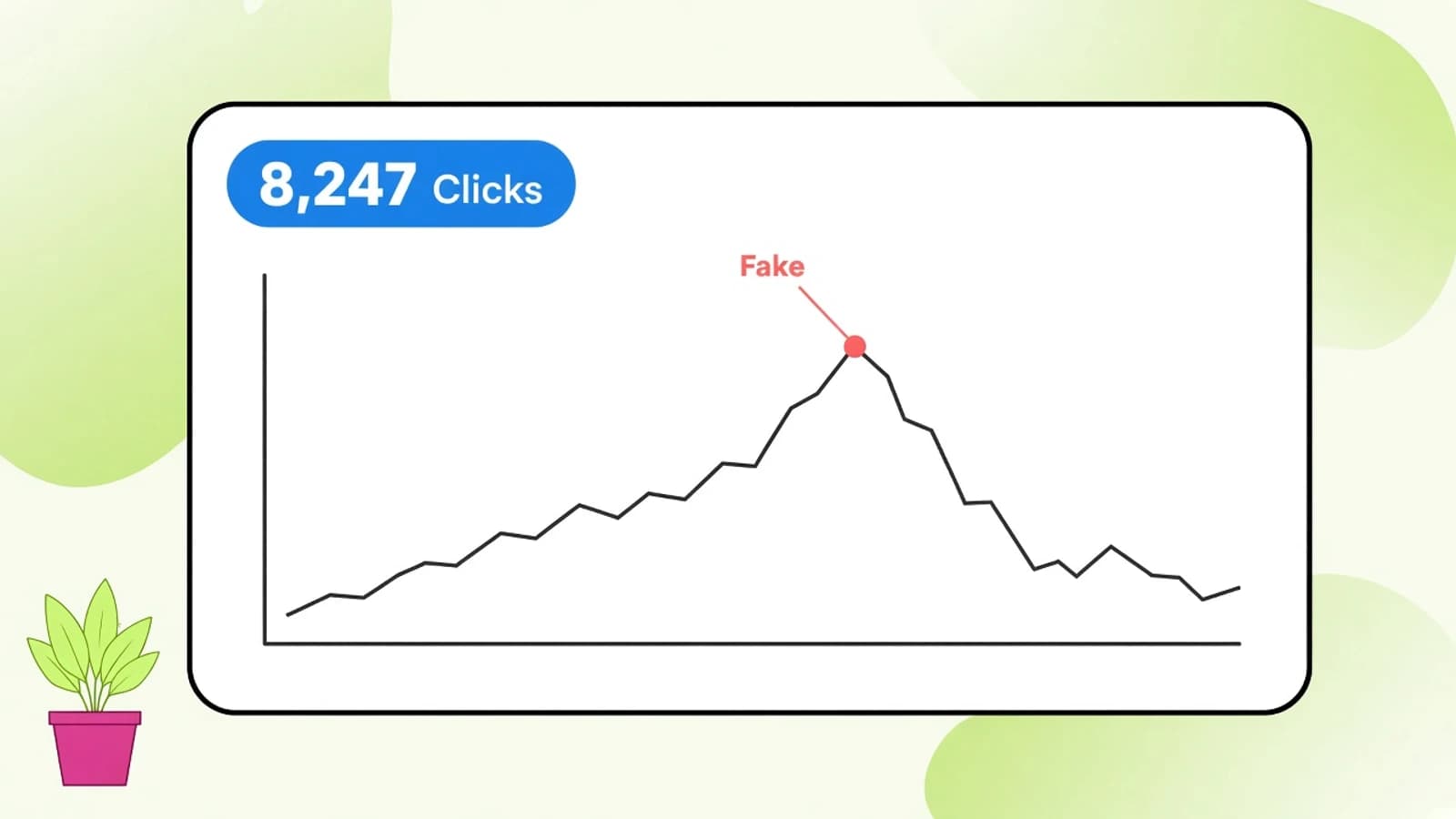
- Distort click and conversion reporting, making CTR, CPA, and funnel metrics harder to interpret
- Add noise to optimization decisions when teams react to polluted signals
- Create investigation work for in-house marketers and agencies
What we do not claim: that every invalid click necessarily raises CPC, or that every account's automated bidding is permanently damaged. Impact depends on volume, campaign structure, conversion tracking quality, and how aggressively systems optimize on click-level signals.
Warning Signs Advertisers Should Investigate
Treat these as indicators to investigate - not as courtroom evidence:
- Unusual click frequency from the same sources in short windows
- Repeated activity from related networks where that data is available
- Geographic concentrations that do not match your targeting or customer base
- Engagement that never progresses past the first pageview
- Large gaps between ad clicks and website sessions when tracking is correctly implemented
Always check tracking configuration before blaming fraud. Broken tags and attribution settings create false alarms.
How to Reduce Click Fraud Risk
A practical sequence:
- Review traffic patterns at campaign and ad-group level, not only account totals
- Monitor anomalies against your own baselines (seasonality, promotions, creative changes)
- Use platform-provided invalid traffic controls and credit processes where available
- Apply supported exclusions carefully - IP lists on platforms that allow them, audience-based options where that is the supported path
- Review results over time after any change; over-blocking can remove real buyers
For Google-specific investigation steps, read how to detect invalid traffic in Google Ads. Product capabilities such as detection reasons and supported exclusions are summarized on Features.
Can Every Invalid Click Be Prevented?
No. Advertising platforms filter some invalid activity themselves, but coverage is incomplete by design and by the limits of what can be observed. Shared networks, mobile carriers, VPNs, and sophisticated automation all reduce certainty.
Detection is probabilistic. Good tools and workflows reduce waste and improve clarity; they do not promise zero invalid traffic or guaranteed savings percentages.
Conclusion
Click fraud is real, but so is overreacting to noisy data. Define terms carefully, investigate warning signs with campaign context, use platform controls, and apply exclusions only where evidence and platform support justify them. That measured approach protects budget without treating every unusual visitor as an attacker.
Related articles
Learn how ClicksArmor approaches detection and supported exclusions across platforms.